The Birth of a Movement in North London
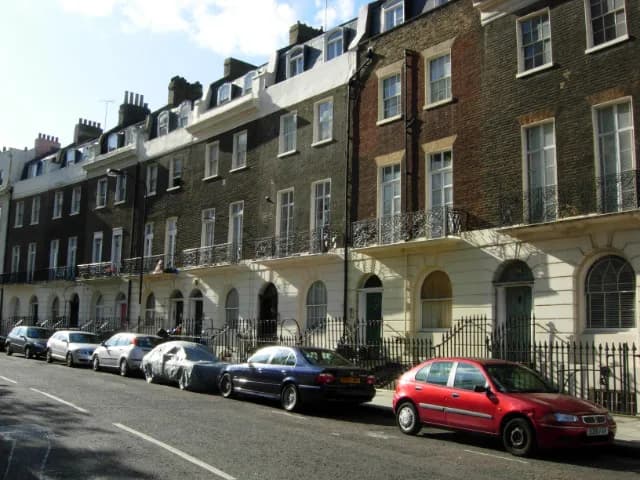
In the early years of the twentieth century, a quiet revolution in British art was taking shape in the rented rooms and studios of Camden Town. Walter Sickert, a German-born painter who had trained under James Abbott McNeill Whistler and been influenced by Edgar Degas in Paris, established his studio at 6 Mornington Crescent in 1905. This address would become the unlikely epicentre of one of Britain's most significant avant-garde art movements.
Sickert's arrival in Camden followed years of artistic apprenticeship. Born in Munich in 1860, his family had settled in England in 1868. After brief study at the Slade School, he became Whistler's pupil and etching assistant in 1881. A pivotal meeting with Degas in Paris in 1883 exposed him to French Impressionism and Post-Impressionism, influences that would shape his distinctive approach to painting the grittier aspects of urban life.
The Formation of the Camden Town Group
The Camden Town Group emerged from informal gatherings that Sickert had been hosting since 1905. In 1907, he founded the Fitzroy Street Group, which met at 8 Fitzroy Street to discuss art and display their work. This looser association crystallised in 1911 into the Camden Town Group, named after the area where several members lived and worked. The group was formally established with sixteen members, all men, and elected Spencer Gore as its first president.
The membership roster reads as a roll-call of British Post-Impressionism: Robert Bevan, Harold Gilman, Charles Ginner, Duncan Grant, Wyndham Lewis, Augustus John, Lucien Pissarro and others. Their work was heavily influenced by Vincent van Gogh and Paul Gauguin, embracing bold colour and expressive technique that marked a decisive break with Victorian academic traditions.
Camden's Artistic Geography
The group's connection to Camden was not merely nominal. Sickert's studio at 6 Mornington Crescent became a regular meeting place, with members gathering to discuss their work and the artistic developments of the day. Spencer Gore, the group's first president, lived and worked at 31 Mornington Crescent from 1909 until his death in 1912. Both addresses now bear Blue Plaques from the Greater London Council and English Heritage.
Other Camden locations featured prominently in the group's activities. Sickert had earlier studios at 13 Robert Street in Cumberland Market in 1894, and at 21 Augustus Street, a former gin distillery nicknamed the "Vinegar Factory," where he painted views of Cumberland Market around 1910. Robert Bevan maintained a studio at 49 Cumberland Market, where he hosted Saturday "At Homes" for fellow artists. The area between Regent's Park and Euston railway station, with its hay and straw market operational from 1830 until the 1920s, provided both subject matter and affordable studio space for the artists.
The Camden Town Murder and Artistic Controversy
The group's name became indelibly linked to scandal through Sickert's "Camden Town Murder" series of paintings from 1908. These works, originally given more innocuous titles such as "What Shall We Do for the Rent?" and "Summer Afternoon," were later renamed by Sickert to reference the murder of Emily Dimmock on 11 September 1907 at Agar Grove, then known as St Paul's Road. The paintings depicted domestic interiors with a sense of unease and psychological tension that shocked contemporary audiences and established Sickert's reputation for finding art in the darker corners of London life.
This fascination with urban seediness was characteristic of Sickert's broader approach. His painting "Jack the Ripper's Bedroom" (c. 1907) depicted a room in which he believed the infamous murderer had lodged. His best-known work, "Ennui" (c. 1914), exists in at least five painted versions and shows a couple in a dingy interior, capturing the quiet desperation of working-class life.
Exhibitions and Legacy
The Camden Town Group was short-lived, holding only three exhibitions between 1911 and 1912. In 1913, it merged with the Fitzroy Street Group to form the London Group, which continues to the present day. Despite its brief existence, the group's influence on British art proved enduring. They pioneered the exhibition of Cubist and Post-Impressionist work in Britain and established a distinctly British form of modernism that would influence later generations of artists including David Bomberg, Francis Bacon, Frank Auerbach and Leon Kossoff.
Sickert continued to teach at the Westminster School of Art and founded his own private art school, Rowlandson House, at 1 Highbury Place on Hampstead Road in 1910. The school operated until 1914 and helped train a new generation of British artists in the Post-Impressionist approach.
Camden's Continuing Artistic Heritage
The legacy of the Camden Town Group extends beyond art history into the very identity of the borough. The group's fame contributed to the naming of the London Borough of Camden in 1965, cementing the area's association with artistic innovation. Today, visitors can find Blue Plaques marking Sickert's studio at 6 Mornington Crescent and Gore's residence at 31 Mornington Crescent, tangible reminders of the area's bohemian past.
While Cumberland Market itself has vanished, replaced by the Regent's Park Estate after the original market buildings were demolished between 1938 and the 1950s, the artistic community that flourished there remains part of Camden's cultural DNA. The Islington Local History Centre holds Sickert's personal papers, providing researchers with access to the intimate details of this transformative period in British art.
The Camden Town Group's story reminds us that long before Camden became synonymous with punk rock, alternative fashion and weekend markets, it was already a crucible of artistic innovation. In the shabby studios of Mornington Crescent and Cumberland Market, a generation of British painters forged a new visual language that would reshape the nation's art.